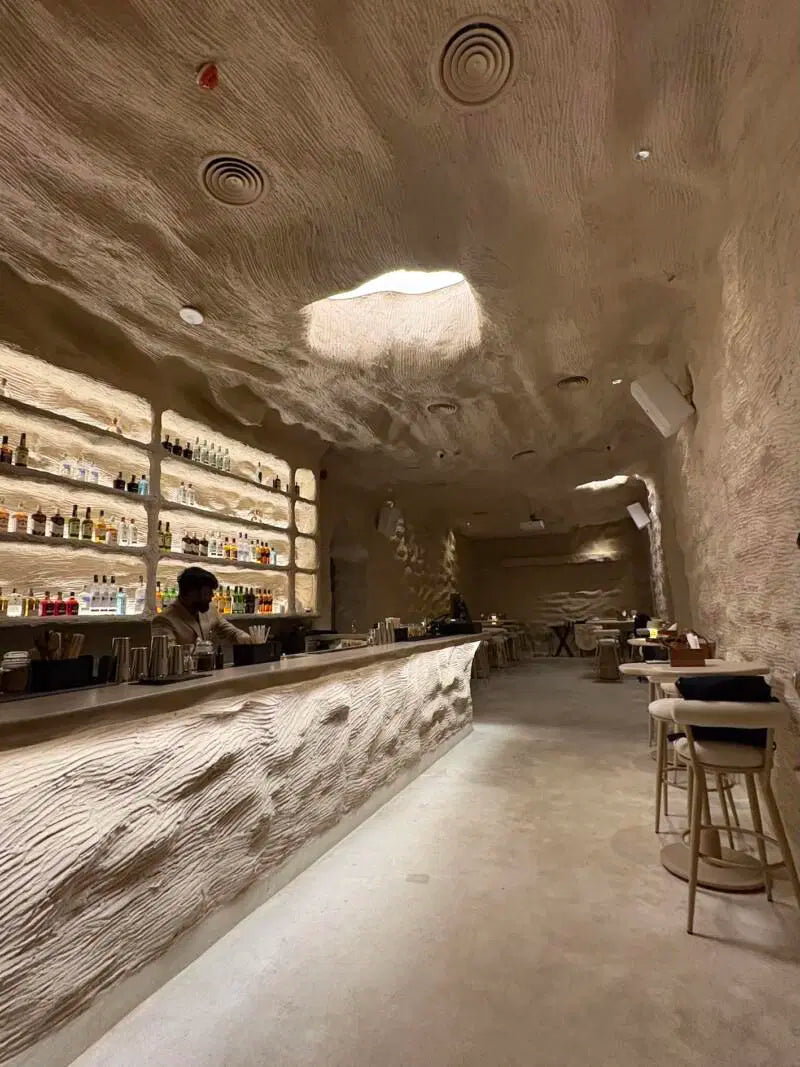
Total Control
Create up to 250 lighting scenes, fine-tune illuminance levels, trigger lighting based on presence detection, integrate daylighting strategies, and control blinds – all from a single, intuitive interface designed for everyday use.

Create memorable atmosphere that captivates from the first moment
Lighting That Defines the Guest Experience
In hospitality first impressions matter. Thoughtfully designed lighting shapes the mood of a space, enhances textures and products, and draws guests into a distinctive experience from the moment they arrive.
Contact us Download design guideCreate up to 250 lighting scenes, fine-tune illuminance levels, trigger lighting based on presence detection, integrate daylighting strategies, and control blinds – all from a single, intuitive interface designed for everyday use.
Lighting can be dynamically adapted to different times of day, moods, or events, allowing hospitality spaces to instantly transform and deliver consistent, high-quality guest experiences.
Casambi’s long-range wireless capabilities extend lighting control beyond interior spaces to façades, terraces, gardens, and parking areas, ensuring a cohesive visual experience throughout the entire property.
Casambi’s wireless lighting control technology simplifies specification, installation, commissioning, and daily operation, making it easy for restaurants and hotels to implement smart lighting without complexity or disruption.
for Hospitality Lighting
Wireless lighting can be installed without surface reconstruction or downtime, making it ideal for existing buildings.
Commission and adjust lighting remotely using an app, reducing on-site work and speeding up project delivery
Expand wired installations wirelessly and upgrade them with occupancy and daylight sensors as needed.
Create schedules that automatically turn lights on, off, or dim them to predefined levels.
Adapt lighting behavior to daily routines, operating hours, or special events with flexible timers.
Circadian lighting scenes support alertness, wellbeing, and productivity throughout the day.
Control lighting from anywhere using a mobile device, giving full visibility and flexibility.
Reconfigure luminaires and scenes quickly without physical access to the installation.
for Hospitality Environments
To ensure that different lighting scenarios can be created over time in the most cost-effective and energy-efficient way, and that auxiliary lighting can be incorporated and controlled easily, and if necessary, separately.
To provide appropriate light levels to carry out tasks performed in the space. Emergency lighting should also be cognizant of sustainability drivers while preserving aesthetics and simultaneously catering to all the different use cases within the space.
To minimize energy consumption and provide the tools that enable continuous monitoring and analysis of a lighting system’s energy performance and light pollution levels.
Comprehensive PDF guide with design recommendations, product selection guidance, and specification support for hospitality environments.
Connect with our team for project-specific guidance, product recommendations, and technical support for your hospitality project.